WHY NEW CONSTRUCTION IS OUTPACING RESALE IN NORTHEAST FLORIDA
Navigating the Northeast Florida real estate market often comes down to a classic choice: buy an existing home in an established neighborhood or choose new construction in a growing community. For years, resale properties were the default value play, while new builds came with a steep premium.
Market dynamics across Jacksonville, St. Johns, and Clay County have shifted that balance. Builder concessions, modern building codes, and rising maintenance costs on older homes have made new construction one of the most compelling financial opportunities available today.
1. BUILDER FINANCING AND RATE BUYDOWNS
Individual resale sellers rarely have the capital or inclination to subsidize a buyer's 30-year mortgage rate. National and regional builders do.
To keep inventory moving, production builders partner with affiliated mortgage lenders to offer aggressive financial incentives:
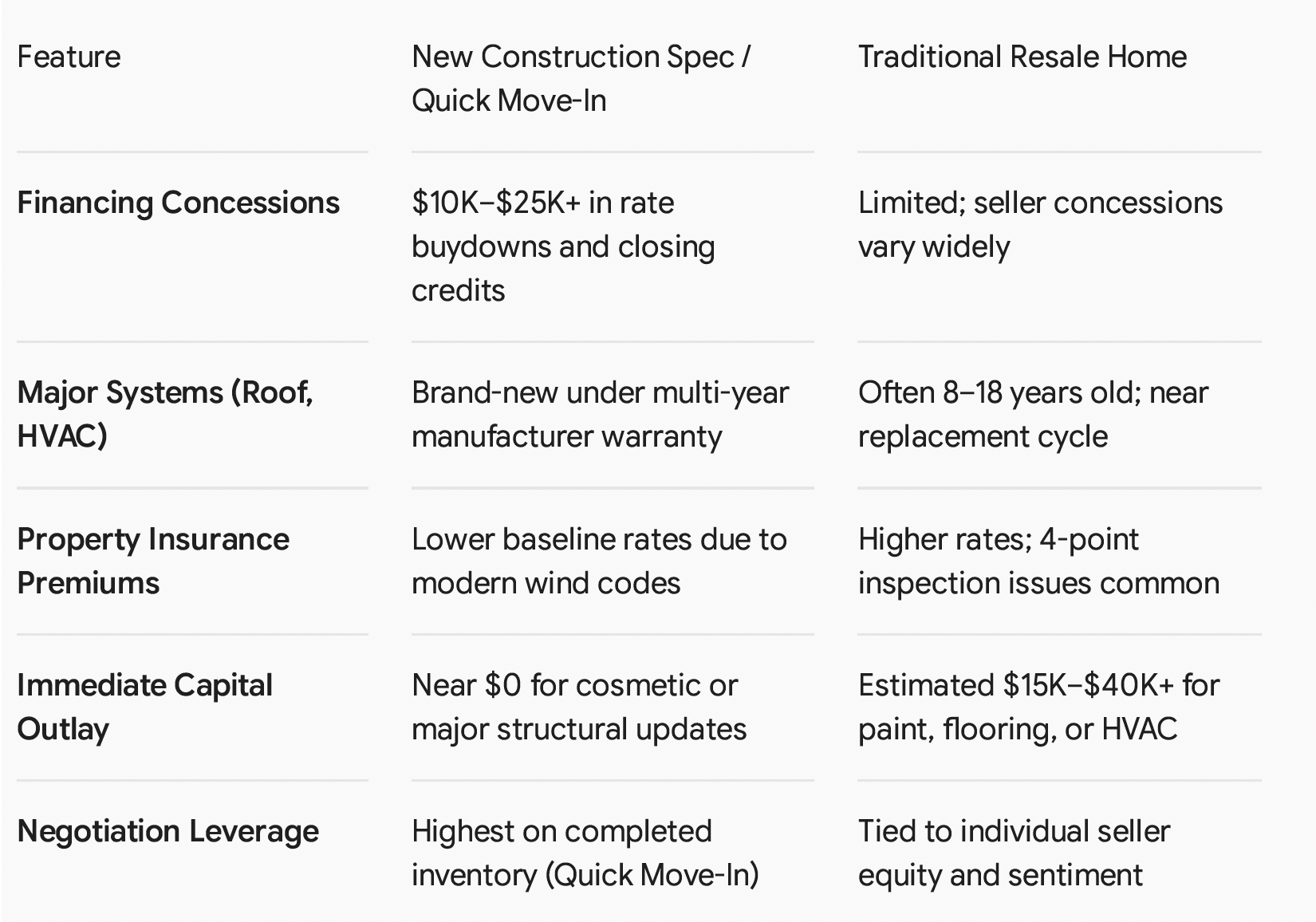
- Permanent Rate Buydowns: While open-market mortgage rates hover higher, builders routinely advertise fixed rates in the low-to-mid 5% range on select inventory homes. On a $450,000 mortgage, a 1% rate reduction saves roughly $270 to $300 per month, keeping thousands of dollars in your pocket annually.
Substantial Closing Cost Credits: Builders frequently provide $10,000 to $20,000 in flex cash or closing cost credits when using their preferred lender. Buyers can apply these credits directly toward prepaid taxes, homeowner insurance, or temporary 2-1buydowns to minimize upfront out-of-pocket cash.
2. THE REAL COST GAP: NEW VS. RESALE
3. FLORIDA INSURANCE CODES AND ENERGY EFFICIENCY
In Florida, a home's age directly influences monthly operating overhead through homeowners insurance and electric bills.
Wind Mitigation & Insurance Savings: New builds conform to current Florida Building Codes, featuring hurricane-rated roof clips, modern secondary water barriers, and impact-rated openings or shutters. These features qualify buyers for maximum wind mitigation credits, significantly reducing annual hazard insurance premiums compared to a home built 20 years ago.
Modern Energy Efficiency: With tighter building envelopes, spray foam or R-38 attic insulation, and high-efficiency heat pumps (15+ SEER2), monthly utility bills stay predictable during hot First Coast summers.
4. IMMEDIATE PEACE OF MIND WITH BUILDER WARRANTIES
Buying an existing home often comes with surprises in the first year: a failing water heater, leaking plumbing lines, or a worn AC compressor.
New construction standardizes your protection through structured 1-2-10 warranty programs:
1 Year: Comprehensive coverage on materials and workmanship (drywall, trim, hardware).
2 Years: Mechanical systems coverage (electrical, plumbing distribution, HVAC ductwork).
10 Years: Major structural defect protection for load-bearing walls and foundations.
This warranty coverage eliminates the "repair reserve anxiety" that many buyers face after closing on an older home.
NAVIGATING BUILDER CONTRACTS WITH EXPERT GUIDANCE
The on-site agent in the builder’s model home is courteous and helpful, but they work exclusively for the builder. Their job is to protect the builder's margins, enforce their specific contracts, and maximize returns for the developer.
Having dedicated buyer representation costs you nothing extra, yet it ensures an experienced advisor is in your corner to:
1. Identify completed quick-move-in homes where builders face carrying costs and offer their deepest concessions.
2. Negotiate base lot premiums, structural upgrades, and rate buy-down combinations.
3. Coordinate independent third-party inspections (pre-drywall and final walk-through)before closing.
Check out this article next